
Small Business Community Marketing: How Local Events Help Businesses Grow

You Don’t Need a Huge Festival to Bring People Through the Door: How Small Business Marketing for Community Events Help Local Businesses Grow

When small-business owners think about community events, it’s easy to picture large festivals, road closures, huge budgets, dozens of vendors and months of planning.
But some of the most effective community-building ideas are much simpler.
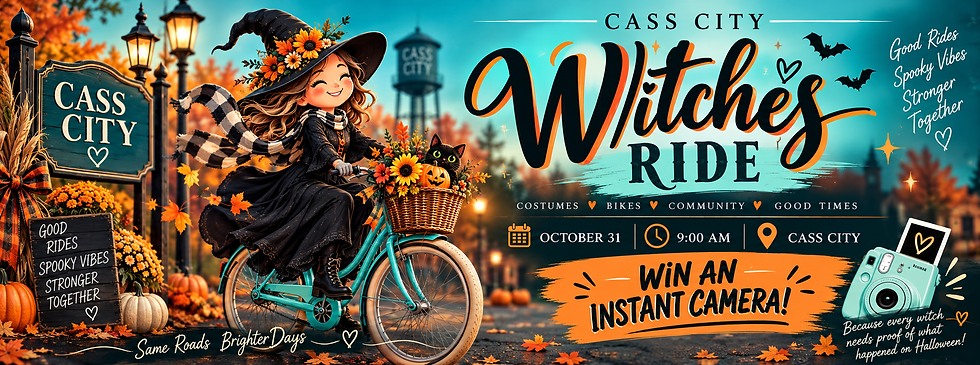
Sometimes it’s a group of witches riding bicycles through town on Halloween morning.
Sometimes it’s neighbors gathering around a table to turn ordinary glass plates into something beautiful.
And sometimes those seemingly small ideas are exactly what a community needs to get people out of their houses, meeting one another and discovering local businesses along the way.
At McEver Group, we believe business growth and community growth are connected.
If we want our local businesses to thrive, we need to give people reasons to participate in their community.
That is part of the thinking behind two events we're working on in Cass City, Michigan: the Cass City Witches Ride and a Stacked Glass Art community craft night.
The events are completely different.
But from a business-growth perspective, they demonstrate the same important idea:
Create a reason for people to gather, and you create opportunities for local businesses to connect with them.

Stop Waiting for People to “Shop Local”
We hear the phrase shop local constantly.
And it's a great message.
But asking people to support local businesses isn't enough.
Communities also need to create opportunities for people to actually experience local.
Give someone a reason to come into town.
Give them something fun to talk about.
Give families a tradition.
Give friends a reason to meet.
Give someone a reason to walk into a business they've never visited before.
That's when “shop local” starts becoming an action instead of simply a slogan.
Example #1: The Cass City Witches Ride
On Halloween morning, we're bringing something a little unusual to Cass City:
witches on bicycles.
The Cass City Witches Ride is designed to be fun, lighthearted and memorable.
It doesn't require building an enormous festival.
It doesn't need a concert stage.
It doesn't require hundreds of vendors.
It's an experience.
And experiences give people something incredibly valuable from a marketing
perspective:
a reason to pay attention.
People photograph them.
People share them.
People tag their friends.
They talk about them before the event.
They talk about them afterward.
And, most importantly, they remember them.
That creates an opportunity for businesses.
A coffee shop might create a Witches Brew special that morning.
A boutique could offer a Witchy Weekend promotion.
A restaurant could create a post-ride lunch special.
A bakery could sell themed cookies.
A business could donate a prize.
Another could sponsor part of the experience.
Suddenly one little bicycle ride can create multiple opportunities for businesses throughout town.
That's community-based marketing.
You Don't Have to Be the Organizer to Benefit
This is where many businesses miss an opportunity.
When something is happening in your community, you don't necessarily need to sponsor it or have a booth to benefit from it.
Ask yourself:
How can my business participate in the conversation?
If 25 women are coming into town for an activity and brining their family, what might they want before or afterward?
Coffee?
Breakfast?
Lunch?
Shopping?
A special product?
A photo opportunity?
Maybe your participation is as simple as putting something funny on your sidewalk sign.
Great marketing doesn't always mean purchasing an advertisement.
Sometimes it means recognizing where people's attention already is and finding an authentic way for your business to become part of it.
Example #2: Stacked Glass Art
Our community glass-art event represents another kind of opportunity.
Instead of moving people through town, we're bringing people together around a shared activity.
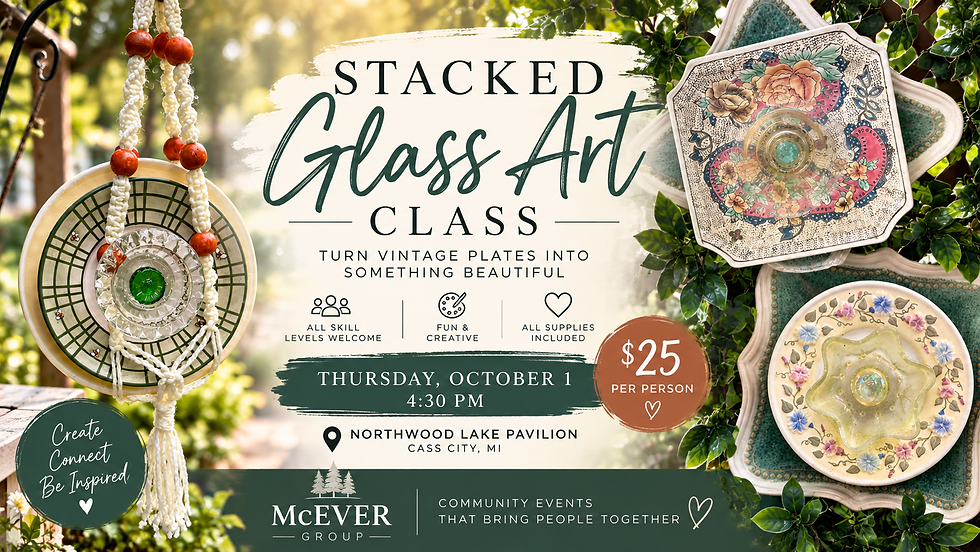
They're going to sit together.
Create something.
Talk.
Laugh.
Meet people they may not already know.
And leave with something they made.
At first glance, that may not seem like economic development.
But zoom out.
Community connection matters to local economies.
People who feel connected to where they live are more likely to participate in what's happening there.
Participation leads to relationships.
Relationships lead to recommendations.
Recommendations lead to businesses being discovered.
And repeated positive experiences help create communities where people actually want to spend their time.
That's good for everyone doing business there.
Small Events Can Create Big Marketing Opportunities
Here's something I want every small-business owner to understand:
You don't have to create the entire event yourself.
Look at what's already happening around you.
Then build around it.

Suppose there's a community craft night happening Thursday evening.
A restaurant could post:
Headed to craft night? Stop in for dinner first.
A coffee shop could create a limited-time drink.
A retailer could offer attendees a small discount that evening.
A salon could give away a gift certificate as a door prize.
A photographer could capture some images.
A business could provide supplies.
Those collaborations expose businesses to audiences they might otherwise spend significant advertising dollars trying to reach.
And they're doing it through something people actually want to participate in.
Your Ideal Client Is Already Going Somewhere
This is one of the biggest concepts we teach businesses at McEver Group.
Instead of constantly asking:
“How do I get people to come to me?”

Start asking:
“Where is my ideal client already going?”
What events do they attend?
What organizations do they belong to?
What businesses do they visit?
What hobbies do they have?
Where do they spend Saturday morning?
Where do they go with their friends?
What causes do they support?
Once you know those answers, marketing becomes much easier.
You don't always have to build an audience from scratch.
You can build relationships with the places, organizations, businesses and events where that audience already exists.

Collaboration Beats Competition
This is especially important in smaller communities.
Imagine ten businesses individually spending money trying to attract the same 100 people.
Now imagine those ten businesses collaborating to create an experience those 100 people genuinely want to attend.
The second scenario can create far more attention.
One business has an email list.
Another has a strong Facebook following.
Another has the perfect location.
Someone has a great idea.
Someone else has equipment.
Another business provides a prize.
Individually, those resources may seem small.
Together, they can become significant.
That's why community partnerships can be such an effective small-business marketing strategy.
Events Should Create a Ripple
A successful community event shouldn't exist in isolation.
Think about what happens:
before → during → after.
Before the event, businesses can create anticipation.
During the event, they can participate.
Afterward, photographs, videos, stories and relationships continue generating attention.
One two-hour event can potentially create weeks of social-media content.
That's a marketing asset.
Start Small
You don't need 1,000 attendees.
In fact, I would rather see a community create a fantastic experience for 30 people and repeat it than attempt something enormous once and never do it again.
Thirty people who have a wonderful experience tell other people.
The next event gets 45.
Then 70.
Eventually something becomes a tradition.
And traditions are incredibly powerful for communities.
People put them on their calendars.
Businesses plan around them.
Visitors travel for them.
Families return for them.
That's how little ideas become part of a community's identity.
What Could Your Business Do?
The next time you hear about something happening in your town, don't immediately scroll past it because you're not the organizer.
Ask:
Who is attending?
Are those people part of my ideal audience?
What could my business contribute?
What could I offer before or after the event?
Is there another local business I could collaborate with?
How could I make the experience better?
And perhaps most importantly:
How can I participate without making everything about selling something?
Because the strongest community marketing doesn't feel like advertising.
It feels like participation.

Growing Businesses by Growing Communities
That's a major part of what we're building at McEver Group.
We help businesses become easier to find through websites, SEO, visibility and marketing strategy.
But visibility isn't only digital.
Sometimes visibility happens because your business showed up.
Sometimes your next customer discovers you at a community event.
Sometimes two business owners meet and create something together.
Sometimes an idea as simple as witches riding bicycles through town gets hundreds of people talking.
And sometimes a table full of glass plates gives neighbors a reason to meet each other.
Those things matter.
Because strong businesses help build strong communities.
And strong communities create more opportunities for businesses to grow.
McEver Group helps businesses get found, get chosen and get clients—while creating ideas and experiences that help communities grow.

Comments